Brampton Deep Cleaning Experts
Food hygiene and professional sanitation experts in Brampton support your business in maintaining dining venues, commissaries, bakeries, warehouses, and food service units to code. They disinfect high-touch points, food-contact surfaces, equipment, floors, drains, restrooms, and prep areas using certified sanitizers, correct concentration, and documented exposure durations.
Key Takeaways
- Food safety cleaning experts from Brampton assist restaurants, grocery departments, commissaries, warehouses, bakeries, schools, mobile vendors, and allergen-sensitive operations.
- They sanitize frequently contacted areas, food-contact equipment, kitchens, floors, drains, restrooms, and storage areas using compartmentalized approaches to avoid cross-contamination.
- Recording of completion through checks, audits, and remedial documentation validates trained vendors have verified approved sanitizer dilution, compatibility, and exposure duration.
- Optimal maintenance calendars consider danger, production volume, transitions, accidents, and requirements when assigning routine, recurring, and seasonal operations by location.
- Opt for vendors with hazard analysis knowledge, health regulatory, competency, WHMIS, preparation, protection, testimonials, color-categorized tools, and audit-ready cleaning paperwork.
Food Safety Cleaning Requirements for Brampton Establishments
You must follow food safety cleaning if your establishment is falls under public health review, food regulations, or HACCP systems. This covers eateries, dining areas, supply warehouses, retail departments, meat counters, fish departments, general stores, and facility-based kitchens.
Proper sanitation protocols is also required in warehouses, food manufacturing plants, cold storage sites, retail bakeries, school nutrition programs, banquet halls, and meal delivery hubs. Mobile and temporary operations count as well, like catering vehicles, festival sellers, and pop-up stands. Your venue demands documented cleaning protocols should your employees work with ingredients, section finished dishes, heat items, or keep allergens organized. In Brampton, hygiene remains not voluntary; it constitutes statutory, functional, and public health standards.
What Do Brampton Cleaning Experts Clean?
Professional cleaning teams specializing in Brampton sanitize touched surfaces, kitchen facilities, ground surfaces, and restrooms in compliance with food safety regulations. Focus on these locations occurs because they pose maximum contamination danger, potential for accidents, and possible regulatory violations.
When you know their cleaning scope, you can verify that your facility's cleaning scope meets operational and regulatory requirements.
Key High-Touch Surface Sterilization
organize cleaning intervals determined by foot traffic, environmental hazards, and business activities.
swab testing to confirm sterilization efficacy
Kitchens, Floors, and Restrooms
Professional cleaners in Brampton prioritize kitchens, floors, and restrooms given that each location involves specific food safety, falling hazards, and public health requirements. In industrial kitchens, you need grease removal from cooking stations, appliance surfaces, drain systems, preparation areas, and backsplashes to reduce bacterial growth and pest activity.
You should also expect documented floor care. is likewise provided as part of the service.
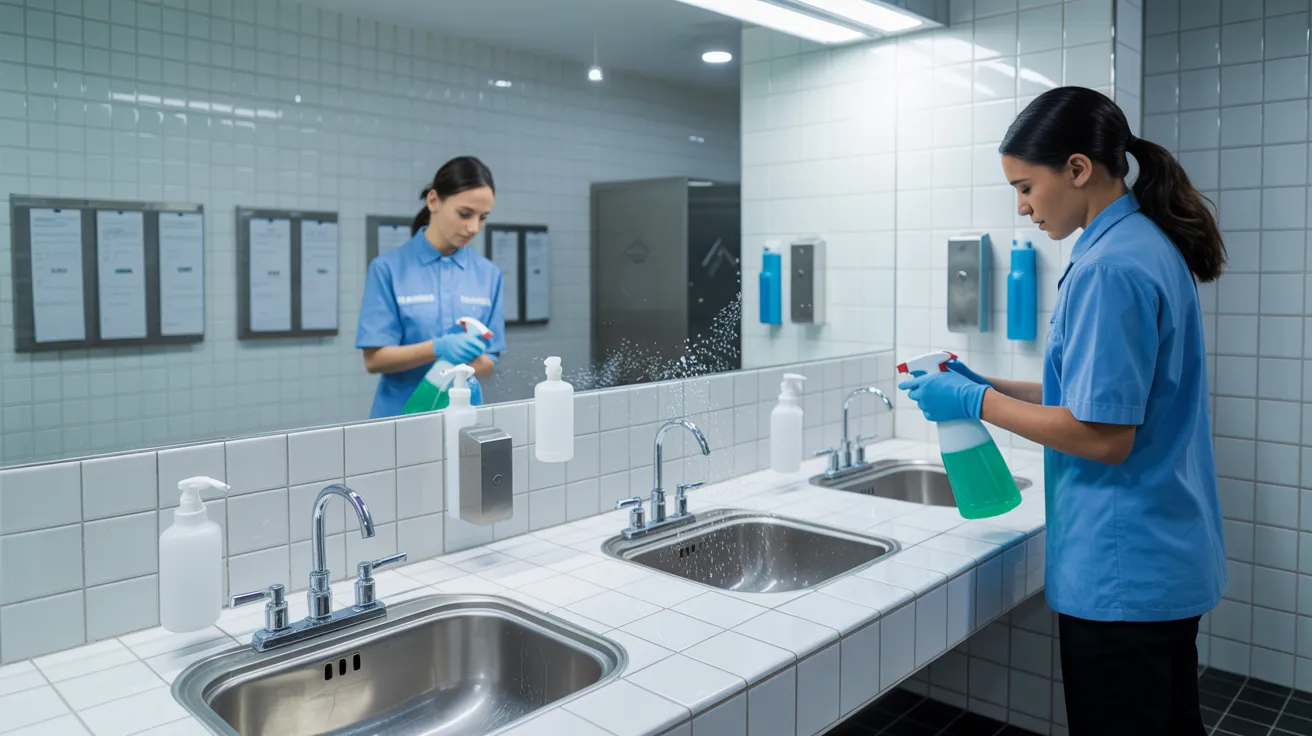
Restroom sanitation involves disinfecting surfaces, fittings, separators, dispensers, and containers, replenishing amenities and managing odor. They also service restaurant moprooms, where chemical storage, sink hygiene, and drainage conditions can affect sanitation compliance and staff safety daily.
How Food Safety Cleaning Benefits Brampton Operations
Brampton businesses need to implement food-safe cleaning standards for satisfying health code requirements and obtaining approval. You also reduce bacterial spread through proper cleaning of food-preparation surfaces, appliances, and frequently-touched items. Most importantly, you safeguard public health by lowering the risk of foodborne illness in your facility.
Food Safety Regulations
Because Brampton food operations operate under strict public health standards, food safety cleaning directly impacts your ability to meet health code requirements, safeguard customers, and prevent enforcement action. You must maintain hygienic food handling zones, documented cleaning schedules, correct sanitizer application, and auditable operational standards that correspond to municipal and provincial inspection expectations.
Thorough sanitation measures promotes allergen management by minimizing particles on joint machinery plus regularly touched locations. If your cleaning standards decline, you risk infractions, corrective directives, brand harm, and potential service suspension during subsequent audits or compliance reviews.
Cross-Contamination Prevention
Adhering to regulatory guidelines requires your skill in preventing cross-contamination throughout routine preparation and sanitation work. You need to separate raw ingredients from ready-to-eat foods, sanitize work stations after each task, and store cleaning supplies separately from food. Structured procedures reduce transfer risks and ensure consistent compliance during inspections.
You could implement allergen segregation to stop main allergens from reaching common areas, containers, or machinery. Use dedicated cutting boards, color-coded tools, and rigorous tool identification so team members avoid blending products during preparation or service. Enforce washing hands following uncooked meat, fish, egg products, or allergens. Swap cleaning rags frequently, and test disinfectant concentration using strips. When employees learn these procedures each shift, you create a cleaner, safer operation that meets Brampton's food safety expectations every day.
Public Health Safeguarding
If food safety cleaning declines, you don't merely face potential inspection issues—you boost the probability of pathogenic contamination harming customers, staff, and the broader Brampton region. You also undermine your responsibility in protecting public health, especially in busy food facilities where pathogens travel quickly through surfaces, equipment, and touchpoints.
You need sanitation procedures that remove soils, sanitize correctly, and verify results. That requires adhering to contact times, employing authorized sanitizers, documenting schedules, and educating employees to meet regulatory standards. These measures facilitate disease prevention by lowering microbial loads before they contaminate surfaces or food. In Brampton, strong sanitation shields at-risk groups, limits outbreak potential, and helps you demonstrate proper care. When you clean to standard, you don't just meet regulations—you actively reduce risk and support safer food service citywide.
In What Ways Does Cleaning Help Achieve Food Safety Compliance?
Embracing thorough cleaning protocols underpins food safety compliance by minimizing contamination hazards, managing pathogen expansion, and maintaining your facility's adherence to sanitation requirements under HACCP-based programs and public health regulations. You validate that food-handling surfaces stay visibly clean and microbiologically controlled, enabling documented preventive controls and inspection readiness.
Cleaning programs additionally bolster allergen control by clearing residues that can cause undeclared allergen exposure.
What's the Best Time to Arrange Commercial Cleaning?
You'll achieve the best results from cleaning plans that account for risk, production volume, and regulatory requirements rather than a rigid calendar system alone.
Plan your periodic tasks from routine cleaning
Finding Quality Brampton Cleaning Experts: A Guide
Screen providers initially by their food-safe sanitation requirements—not budget alone. You need to verify that every company meets CFIA, public health, and HACCP-aligned expectations for your operation. Demand proof of insurance, WHMIS compliance, training records, and management systems. Evaluate technician understanding of contamination dangers, chemical safety, and documented sanitation practices.
Additionally, you need to evaluate service dependability and responsibility. Obtain references from Brampton food operations, then review response times, corrective measures, and communication practices. Verify the company supports supplier audits and can deliver compliance-ready records when inspectors or external parties need proof. Verify equipment is maintained, color-coded equipment are applied correctly, and location-specific dangers are identified. A capable service protects compliance, product integrity, and your reputation.
What's included in a Food Safety Cleaning Plan?
Document a plan that defines every sanitation activity, guideline, and role before production begins. You should include cleaning schedules, approved products, ratios, contact periods, tools, and validation approaches for each zone, surface, and piece of equipment. Remember to add pre-operational inspections, corrective actions, and employee training requirements.
Your plan should also address cross-contamination controls, waste handling, pest-prevention measures, and documented schedules for bathrooms, drainage systems, surfaces, and food-preparation zones. Detail how you'll separate raw and ready-to-eat processes, support ingredient tracking, and ensure accurate allergen labeling through validated cleaning between product changes. You should designate accountability, keep signed records, and compare results against regulatory standards, HACCP controls, and customer requirements. When gaps appear, update procedures immediately and retrain staff.
Commonly Asked Questions
Will sanitation providers handle nighttime hours at Brampton facilities?
Yes, you can book sanitation coverage to support overnight shifts in Brampton facilities. You'll coordinate nighttime cleaning around production schedules, access requirements, and personnel needs. Services typically establish overnight logistics to minimize disruption, maintain standards, and track completed work. You should confirm arrival schedules, management, lockout protocols, and waste management before starting service.
Can Brampton cleaning experts manage hazardous incidents?
Yes, you can locate Brampton cleaning professionals providing hazard containment options. They handle hazardous incidents, evaluate risks, contain affected zones, and begin swift decontamination to minimize exposure and prevent business get the full story disruption. You should confirm timeframes, credentials, safety protocols, and disposal methods. If your facility must meet compliance standards, pick a provider that tracks incidents, follows procedures, and supports verification.
Do green disinfectants operate safely on food preparation areas?
Absolutely, natural disinfectants can be safe for food preparation areas when you choose disinfectants approved for food contact and regulatory compliant. You must check contact times, concentration levels, and rinse procedures ahead of deployment. Botanical formulations lower chemical burden, though you require proof of efficacy against specific pathogens. For maintaining residue free surfaces, implement manufacturer directions precisely and validate your cleaning agent complies with food industry regulations.
Do cleaning plans enable production fluctuations?
Yes, you can modify cleaning schedules for seasonal production changes. You should adjust frequencies, staffing, cleaning agents, and validation steps to correspond to seasonal patterns while upholding regulatory requirements. You'll decrease production interruptions by timing cleaning around line changes, peak seasons, and equipment use patterns. You should also update SSOPs, training, and environmental monitoring to account for periodic risks, emerging allergens, or increased soiling. Regular reviews keep your program functional.
Do professional cleaners instruct staff members in proper hygiene techniques?
Certainly, commercial cleaners train your staff on sanitation best practices. You secure staff training on correct chemical practices, contact times, contamination control, machine disassembly, and documentation procedures. They generally coordinate coaching with HACCP, GMP, and CFIA or local public health requirements. Many execute sanitation audits to check standards, identify gaps, and reinforce corrective actions. This helps you copyright standard processes, pass inspections, and minimize foodborne pathogen risks every day.
Conclusion
By collaborating with Brampton food safety and commercial cleaning experts, you aren't just organizing—you keep your operation compliance-focused and your practices in compliance. From kitchens to processing floors, every sanitized surface and organized space decreases contamination and prevents costly issues. By arranging service at appropriate intervals and adhering to a systematic cleaning protocol, you secure your team, customers, and your credibility. In a strictly regulated industry, hygienic conditions must be prioritized—they're key to business compliance.